Hiking in Andorra: trails and mountain routes by difficulty level
The best hiking routes in Andorra for visitors: from easy valley walks to the most demanding peaks. Real times, difficulty levels and what to always bring.
Andorra has 9,000 hectares of natural parks and more than 800 km of marked trails. What guidebooks rarely make clear is that the Andorran mountains are real mountains: steep elevation gains, temperatures that shift fast, and some peaks with snow well into June. Coming up with city shoes and no water is the most common mistake — and it costs you.
This guide is written for visitors who want to do some hiking during their stay, not for experienced mountaineers. With that in mind, here are the most worthwhile routes ordered by what they will actually demand from you.
What you always carry, whatever the route
Before covering specific routes, a few things apply to every outing in Andorra:
Enough water. At altitude your body needs more than you’d expect. One litre per person for short routes, two for anything over two hours.
A warm layer. You might leave the valley at 25°C, but at 2,500 metres wind and clouds can change everything in minutes. A lightweight layer in your pack weighs nothing and can make all the difference.
Shoes with grip. You don’t need technical hiking boots for every route, but street trainers or sandals on wet rock are a real problem.
Something to eat. Andorra’s climbs are not long in distance but they are demanding in elevation gain. Your body will thank you.
Flat walks: to start easy or rest your legs
Vall d’Incles
Vall d’Incles is the best option for anyone who wants nature without effort. You drive to the parking area at the bend before Soldeu and the route follows the valley floor with almost no elevation gain, the river alongside the path the whole way. In spring, when the snow melts and everything turns green, it is one of the most beautiful corners in the country, full of rushing streams.
This is not a mountain route — it is a walk. But if you have never been in the Andorran Pyrenees and want to understand what the landscape is about, this is the place. From deeper in the valley you can also pick up more demanding routes if you want to extend the day. If you want to stay overnight to get an early start on the trails, there is a basic campsite managed by the Comú de Canillo at the far end of the valley.
Accessible routes: more than a walk, without overdoing it
Sorteny Refuge and Estanyó Lake
The Sorteny refuge, in the Vall de Sorteny Natural Park, is one of the best bases for hiking in Andorra. Several routes start from the park car park, which makes it a good option if you are not sure how much you want to walk.
The route to Estanyó Lake is the most popular: accessible, with high-mountain scenery and no special fitness required, though you do have to climb for a while — it is not flat. If you reach the lake and still have energy, you can continue up to the peak from there, but that section is a different level of effort and not something to improvise.
From the same car park the Rialb Valley route also starts, a quieter trail following a river to another refuge. If you go all the way to the end of the valley you reach Estany Blau. A good option if you want nature without crowds or aggressive elevation.
Tristaina Lakes
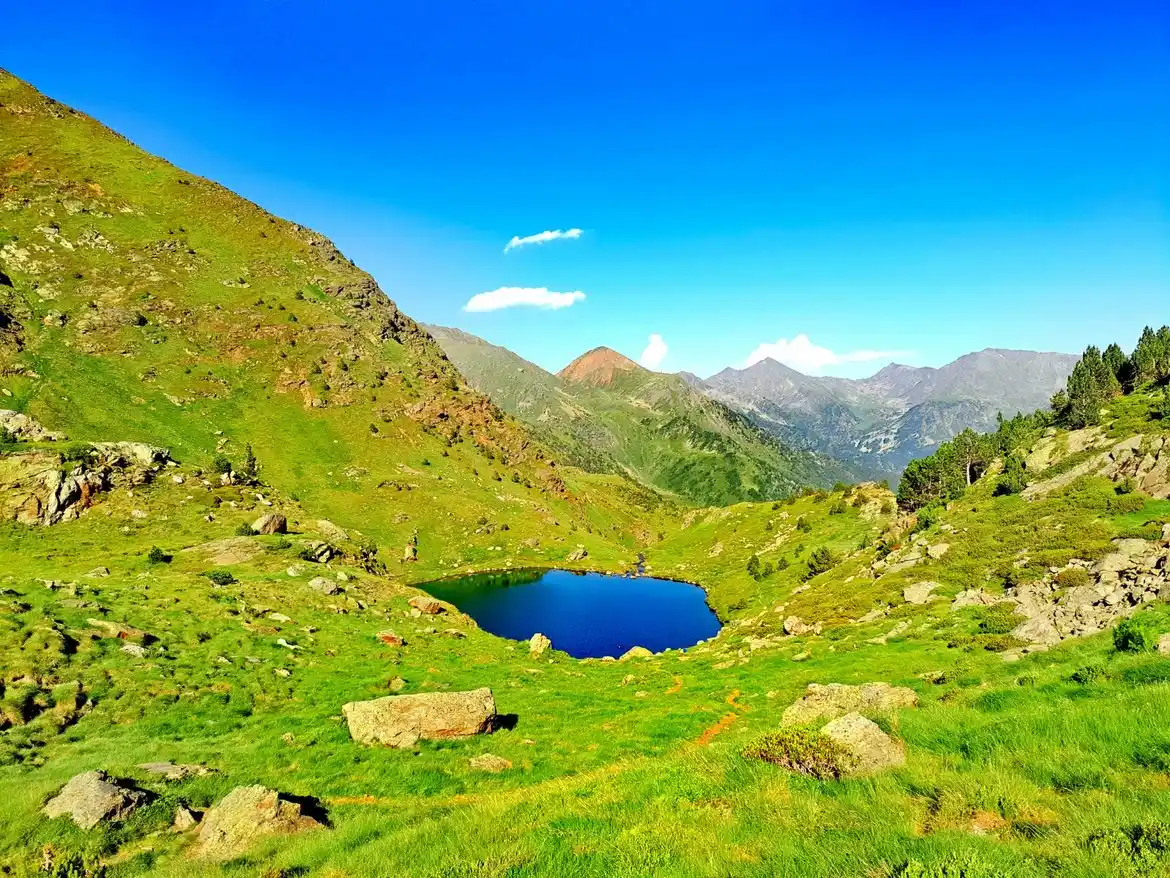
Tristaina is probably the best-known hiking route in Andorra among visitors, and for good reason: the landscape of three lakes above 2,300 metres is spectacular and the access from Ordino is straightforward. The catch is that if you are in reasonable shape it feels short. For someone who has never hiked in the mountains it is a good introduction. For someone who wants a proper walk, it may feel brief. The views are worth it either way.
First serious peak: Pic del Casamanya
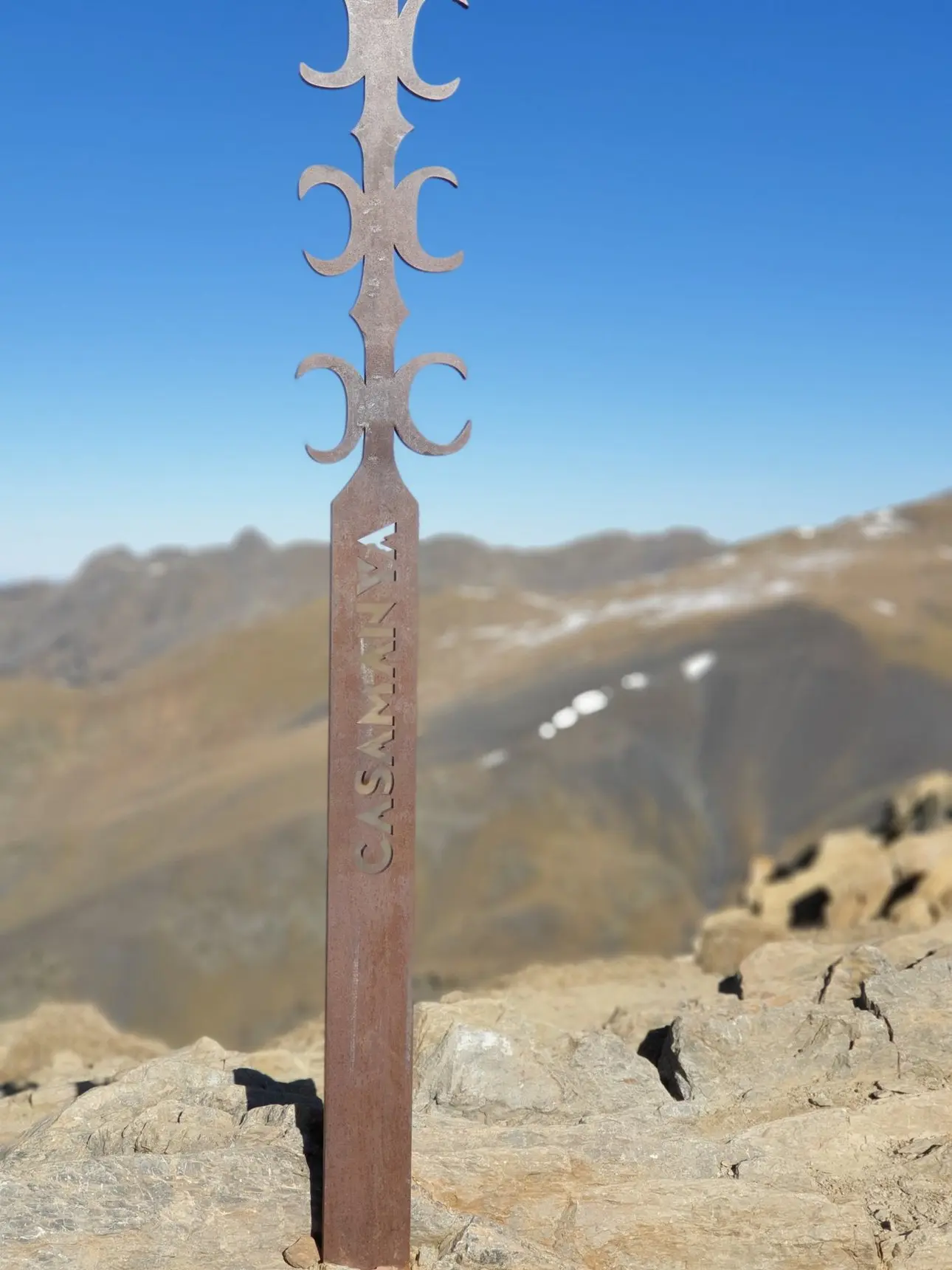
Casamanya is the most accessible peak that genuinely deserves to be called a peak. You drive up to the Coll d’Ordino and the ascent starts there. You can also walk up from the village, but that climb is an excursion in itself.
The ascent from the col has around 700 metres of elevation gain: if you are reasonably fit, the climb takes between one hour and 1:15. If you are not used to mountain walking, allow two hours to get up — and your legs will feel it on the way down.
The views from the summit are among the best in the country, high mountain in every direction. Worth the effort.
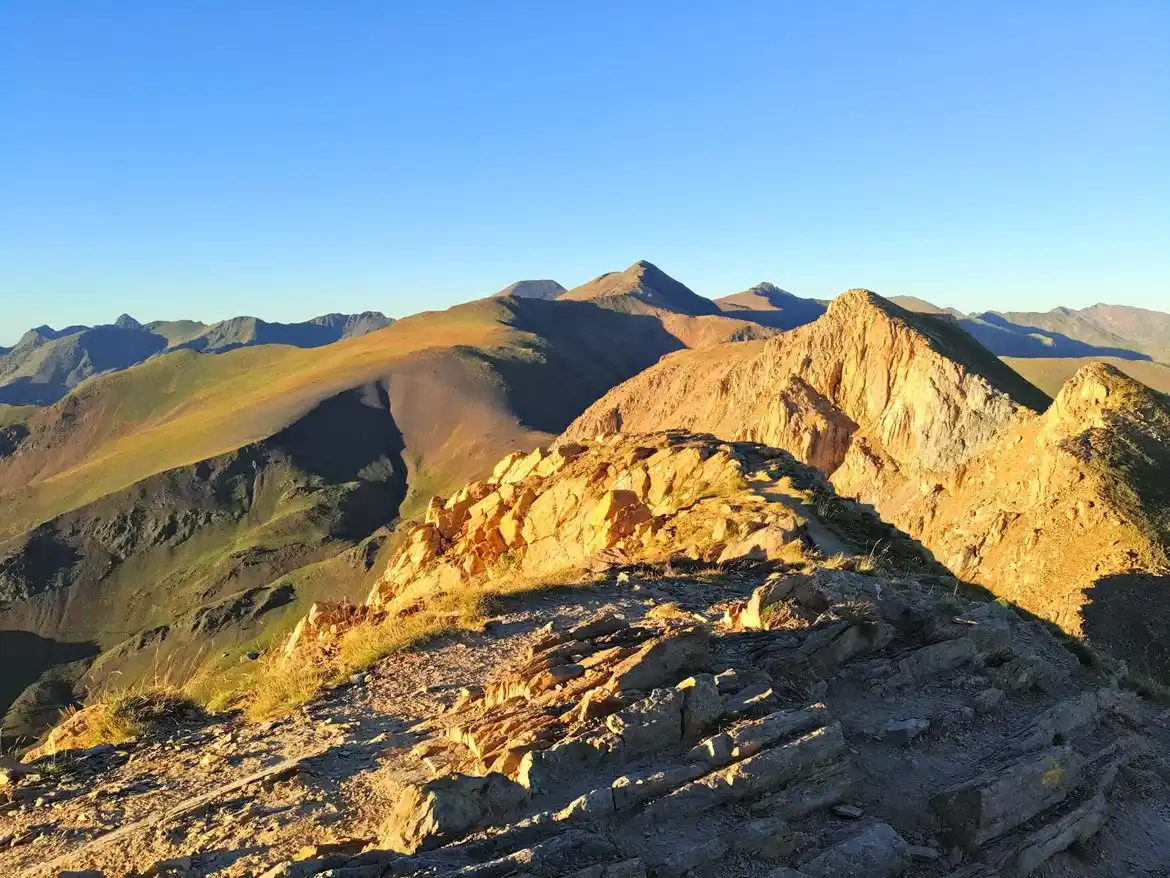
What it is not: a technical or dangerous route in normal summer conditions. But it is not a walk either. Bring water, the warm layer and do not underestimate it if this is your first outing. At 2,500 metres, as soon as the air moves and you arrive sweating, the cold comes fast.
For those who want more: Comapedrosa
Comapedrosa is the roof of Andorra at 2,942 metres. It is not to be taken lightly — you need to be fit. It is a long route: allow around 2:30 hours of climbing if you go without stopping. With breaks at a normal pace, more. The descent is tiring too.
Some people do it over two days, sleeping at the refuge — a reasonable option if you are not in peak condition but want to achieve the summit without destroying yourself.
Snow tends to persist until mid-June. Before that date the route is possible but requires specific preparation, and it is not recommended without experience on snow or without crampons just in case.
This is a route for someone who has hiked peaks before and wants a serious objective. If you have never summited a peak, do Casamanya first.
Other peaks and routes for a return visit
Andorra does not end at Casamanya and Comapedrosa. La Serrera, Font Blanca and several other peaks offer demanding routes with very different landscapes. You cannot do them all in a week. If you come back or have more days, each one deserves its own day out.
For those who want a multi-day adventure, the Coronallacs is a refuge-to-refuge route that crosses the country from north to south via the main lakes. It is demanding, requires good fitness and planning, but it is one of the most complete experiences Andorra has to offer in summer.
When to go
Hiking season in Andorra runs from late June to late September. In May and early June many high-altitude routes still have snow, especially on Comapedrosa. July and August are the busiest months. September is perhaps the best month: fewer people, comfortable temperatures and the first autumn colours appearing.
If you combine the routes with a day in the centre, here is the shopping guide for Andorra and the cafés and restaurants to refuel after the mountain.